Oct202015
Posted at 10:54 AM
Last week, U.S. Commerce Deputy Secretary Bruce Andrews made his first official trip to the Netherlands. He discussed the mutual benefits of an even stronger transatlantic ecosystem amid the current digital revolution, which presents opportunities to deepen the already substantial economic partnership between the United States and the Netherlands.
Bilateral trade in goods and services exceeded $71 billion in 2014, with the Netherlands ranking as the United States’ 8th largest market for goods exports. Furthermore, the United States is the largest source of foreign investment in the Netherlands, and Dutch firms have invested more than $304 billion in the United States.
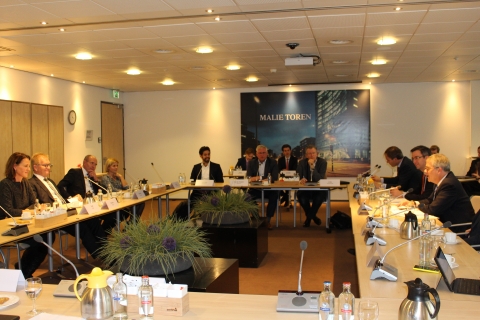
To build on this already thriving partnership, Deputy Secretary Andrews visited The Hague to discuss ways of adding a strong digital component to our existing trade relationship. He participated in a roundtable with representatives from IBM, Microsoft, Ericsson, Phillips, Liberty Global, KPN, RELX, as well as several Dutch start-ups. The Confederation of Netherlands Industry and Employers (VNO-NCW), the largest employers’ organization in the Netherlands, hosted the roundtable, and VNO-NCW President Hans de Boer and CEO of Dell the Netherlands Jeannine Peek co-chaired the event. Commerce Deputy Assistant Secretary for Services Ted Dean also joined Andrews for the conversation.
The group discussed EU policy approaches to the digital economy, EU data protection reform, transatlantic data flows, and cybersecurity. In addition to addressing these topics, Deputy Secretary Andrews expressed support of the Digital Single Market (DSM) initiative that seeks to enable European startups to more easily expand across the continent by harmonizing regulations across European member states. The DSM holds great potential to create a more integrated European market to the benefit of all digital services providers, other businesses, and consumers, as well as help Dutch, other European, and U.S. startups more easily deliver innovative services to consumers across the EU.
Andrews also highlighted how the Commerce Department has taken the lead to develop policies that spur and support the growing digital economy. While the government does not create new companies, the Department can help create conditions and build a policy infrastructure that allows entrepreneurs to take risks, collaborate, find financial support and customers, and ultimately, succeed.
In addition, Deputy Secretary Andrews met with top officials from the Dutch Ministry of Foreign Affairs to discuss how to further strengthen U.S.-Dutch commercial ties and foster more collaboration on trade and investment.
To conclude the trip, Andrews held a bilateral meeting with the Ministry of Economic Affairs’ Secretary-General Maarten Camps to exchange views on the important role governments can play in enabling the emerging digital economy, innovation, and technology-based entrepreneurship.
The Commerce Department will continue working with its counterparts in the Dutch government and the European Commission to create the conditions for innovation to thrive on both sides of the Atlantic.